Important background information on hybrids in the gut!!! - The Trojan Horse -
and sodium is now sodium silicone


Thanks to a new remote viewing session, we have taken another step forward in our understanding.
The session itself dealt with a new preparation that is about to come onto the market, but often connections and other important information come to light. As always, when your subconscious wants to give you complex background information but you cannot understand it in all its complexity, it looks for another way. And this time, once again, it was through a complex set of numbers.
1307 / 859
So what do they mean?
First, a search in the CAS number system yielded a clue:
1307-96-6 → Chromium(III) oxide
859-18-7 → 2-methyl-1-butanol
Chromium(III) oxide is useful as a catalyst, and 2-methyl-1-butanol is more of a fuel. What does this have to do with the technology in our blood?
Quite a lot.
As already mentioned, we have hybrids in our intestines – see this post
Hybrids on their way from the intestine to the blood

When you go through a successful detox program, these hybrid threads appear very quickly in the stool: Some of them with an astonishing length of over 30 cm and as thick as a finger - I know - not appetizing, but we all have them.SAM’s Substack - darkfield-enigma.c…
They must perform an important function, otherwise they would not be there. Among other things, they appear to synthesize 2-methyl-1-butanol—as can various other genetically modified bacterial strains.
As can be read in these links:
One study showed that Saccharomyces cerevisiae (yeast) can produce 2MB using xylose as a carbon source. This was achieved by stimulating mitochondrial activity.biotechnologyforbiofuels.biomedcentral.com
Another study reported the production of 2MB in Corynebacterium glutamicum, a bacterium known for the industrial production of amino acids. Genetic modifications enabled the production of 2MB via the so-called Ehrlich pathway.link.springer.com+8agris.fao.org+8pubmed.ncbi.nlm.nih.gov+8pubmed.ncbi.nlm.nih.gov
In addition, the production of 2MB in Escherichia coli was investigated. Genes from different organisms were combined to enable the conversion of precursor compounds into 2MB.link.springer.com+5pmc.ncbi.nlm.nih.gov+5link.springer.com+5
These studies have nothing to do with transhumanism yet – but!!!
If we have a mechanism that allows 2-methyl-1-butanol to be produced on a larger scale and passed directly through the liver, we obtain a breakdown product that is considered one of the main building blocks of transhumanism:
Carboxylic acid!!!
What is best suited for such a project? The hybrid in the intestine—everything that is absorbed there goes directly through the portal vein to the liver, which then produces the required carboxylic acid from 2-methyl-1-butanol.
Apart from the fact that all of this is highly toxic to the liver, we now have the substance required for the following technical applications directly available in the blood:
The combination of carboxylic acids, nanotechnology, and transhumanism leads us directly into the field of biotechnological human enhancement.
Carboxylic acids are not “transhuman technologies” themselves, but they are essential building blocks for making many of these technologies chemically controllable and biocompatible. This is particularly true in nanotechnology and bioconjugation.
Drug delivery
COOH groups on nanoparticles enable active substances to be delivered directly to diseased cells (e.g., cancer cells, degenerated neurons).
In transhumanism, this can be used to:
Slow down aging processes
Regenerate cells (e.g., through mRNA or CRISPR systems)
Modulate neurotransmitters in the brain (e.g., for enhanced cognition)
Example: A nanocarrier with COOH groups is stabilized in the blood, binds to receptors on target cells, and releases its “amplification cargo” there.
Bioconjugation for implants and bionics
COOH groups enable the chemical coupling of biomolecules to artificial materials.
This allows neural implants or prostheses to be connected to the body in a biocompatible manner.
Example: A brain chip (e.g., Neuralink) with a functionalized surface (COOH groups) can promote neural cell adhesion, which is important for long-term integration into nerve tissue.
Neuromodulation & cognitive enhancement
Carboxylic acid-based nanomaterials can be functionalized to release specific neuroactive substances (e.g., dopamine, serotonin).
This could be used in transhumanism to:
Regulate mood
Increase learning ability
Improve memory
Technically, this is achieved by coupling the nanomaterial to pH-sensitive COOH groups, which release active substances in the acidic environment of nerve cells.
Genetic enhancement (CRISPR, mRNA, etc.)
Carboxylic acid groups help to introduce molecular tools such as CRISPR-Cas9 into living cells.
The –COOH groups enable the attachment of cell-targeting molecules and improve the uptake of gene carriers.
Especially in organic-aqueous systems, 2-methyl-1-butanol helps to improve the solubility of hydrophobic monomers.
Porogen/structure-forming agent in micro- or nanogels
As a porogen (structure-forming solvent) – such as salt crystals – 2-methyl-1-butanol is occasionally used in the production of polymer nanogels or microgel particles.
It influences phase separation, which is important for controlled porosity and water retention.
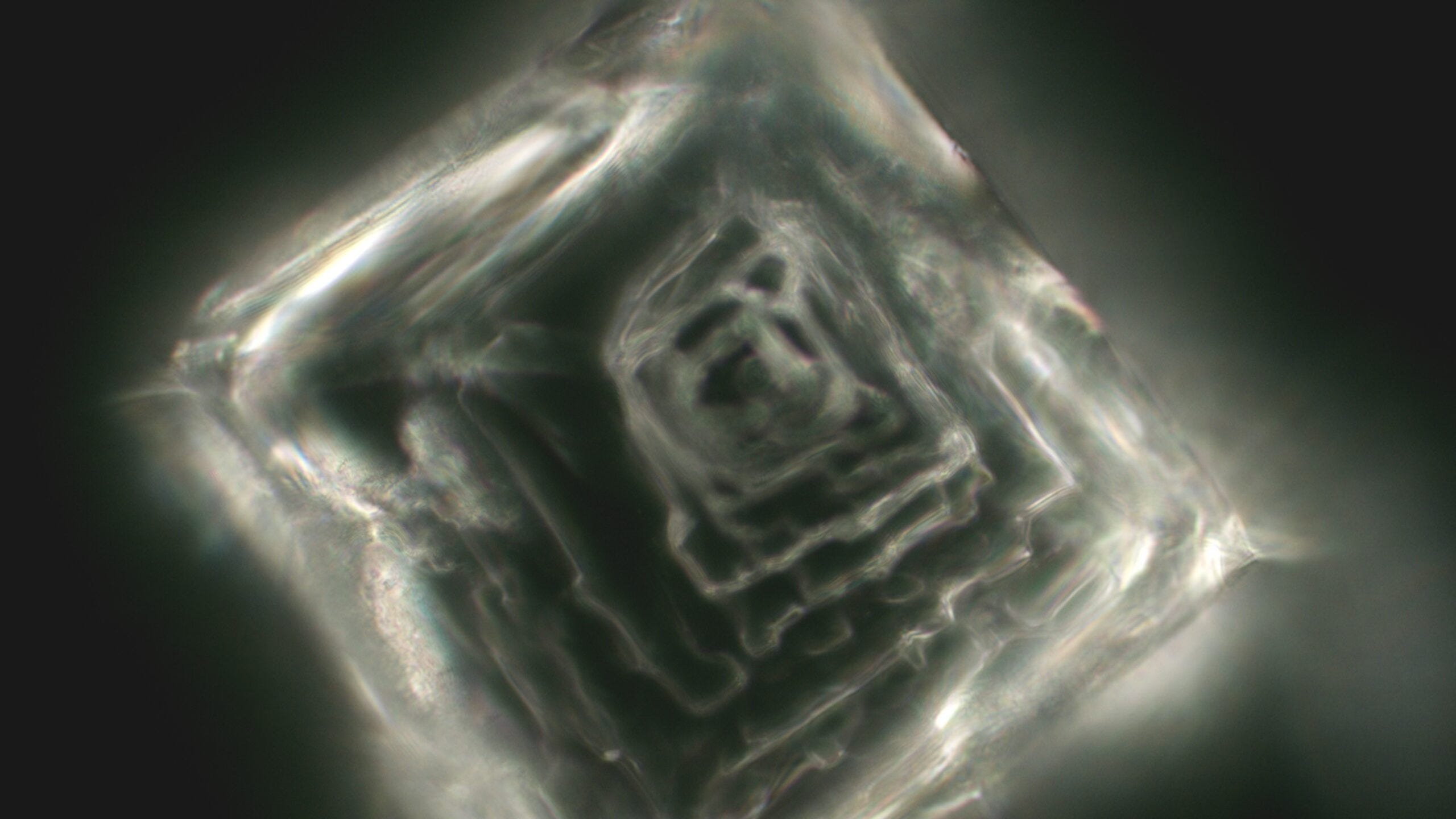
These are our modified salt crystals!!! With the help of an electron microscope, Maria Crisler was able to prove that this is a new sodium-silicon compound.
In certain emulsion- or solvent-based polymerizations of hydrogel networks, 2-methyl-1-butanol can be used as a carrier phase.
Another important point in the session was symmetries and reflections – similar to fractal images.
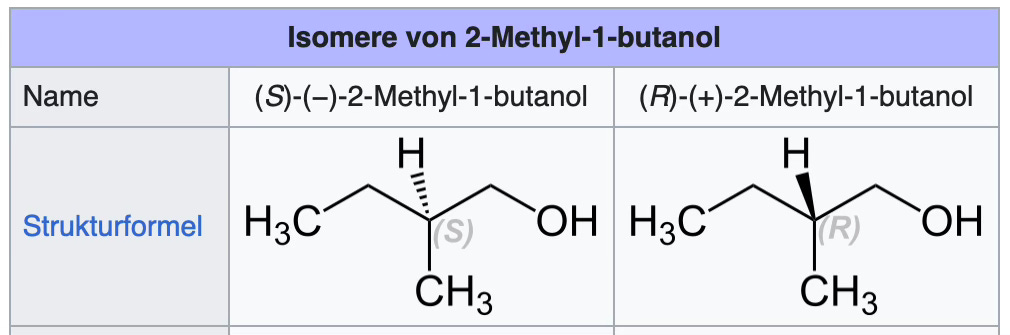
2-Methyl-1-butanol can form mirror isomers
The two enantiomers rotate polarized light in opposite directions.
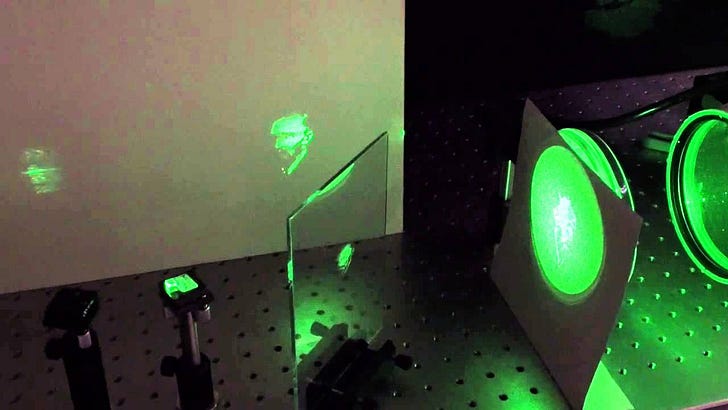
We may be stumbling into nonlinear optics here. And as already mentioned, nonlinear optics can be used to transfer information over time.
The increasing importance of optical qualities of chemical compounds in blood
With so many phenomena and new processes in the blood, it is sometimes difficult to maintain an overview. What is important and where do you start to get caught up in the details?
And now we're missing chromium(III)
Chromium(III) in synthetic biology or gene interfaces
Chromium(III) may serve as a cofactor in artificially constructed enzyme systems, e.g., in the regulation of synthetic metabolic pathways.
Such systems could be integrated into post-biological or extended organisms (e.g., synthetic liver modules, modified muscles with optimized energy utilization).
And synthetic liver modules may well be necessary for the toxicity of 2-methyl-1-butanol.
In a transhumanist context, chromium(III) could be part of a “neuro-metabolic module” via nanotechnology to optimize mental clarity and the brain's energy and glucose supply.
Cr³⁺ can be used in metal-crosslinked hydrogels, bioactive materials, or smart (responsive) hydrogels.
Metal ions as crosslinkers
Chromium(III) ions (Cr³⁺) can act as ionic crosslinkers, similar to Ca²⁺ in alginate hydrogels.
Cr³⁺ ions can form complexes and thereby cross-link the gel, especially in hydrogels with functional groups such as –COO⁻ (carboxylates) or –OH (hydroxy groups).
Example:
Cr³⁺ can form stable lattice structures with carboxyl groups of poly(acrylic acid) or modified chitosan.
Increased mechanical strength
Cr³⁺-crosslinked hydrogels often exhibit:
higher mechanical stability
improved temperature or pH resistance
delayed or controlled water release
Biologically active or responsive hydrogels
In combination with biological polymers (e.g., gelatin, alginate, chitosan), Cr³⁺ can be used to:
Control enzyme release
Respond to pH or redox conditions
Act as an antimicrobial component
A stable embedding or coordinative binding in the hydrogel network is necessary to avoid undesirable side effects when increased amounts are required, as Chromium(III) is cytotoxic.
This closes the circle – although there are certainly other possibilities for discussion.
Brief summary
The hybrids produce 2-methyl-1-butanol, which is absorbed directly and ends up in the liver via the portal vein, where it is converted to COOH and serves as a basic building block for all kinds of transhumanism processes. Our body has several ways of reducing excess COOH, but insulin indirectly ensures that no excess acidic metabolites are produced. This can lead to type 2 diabetes mellitus. Chromium(III) is often used to counteract this, but it is ineffective in this case.
This example clearly shows that conservative medicine is outdated when it comes to the amount of synthetic biology in the body and can even be counterproductive in some cases.
Today, we have to examine everything several times.
I haven't addressed the toxicity of the substances here—I think everyone should look it up for themselves and see what complications it can cause.
CONCLUSION: The hybrid structures from the intestine must be removed!!!
The full remote session is available to paid subscribers on my website darkfield-enigma.com. LINK
The corresponding technical session can be viewed—but only by founders—at this LINK.
SAM
For your help and support here on Substack, you will also receive access to my Future Targets and Extra Targets. These are visible in the paid subscriber area and can be accessed on my website after logging in.
I have set up a Telegram channel where news will be posted, along with information about the detox program. Netiquette is expected.